

















Description
Vintage French Advertising Poster
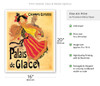
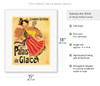
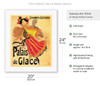
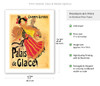
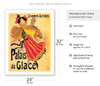
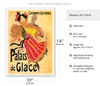
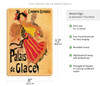
This is a reproduction of a famous vintage poster titled "Champs-Élysées, Palais de Glace", created by the French artist Jules Chéret. The original artwork is a color lithograph poster dating from around 1893 or 1894, though it was also widely reproduced in 1896 as part of the Les Maîtres de l'Affiche series.
Poster Details
Feature: Description
Artist: Jules Chéret (1836–1932), often called the "father of the modern poster".
Title: Champs-Élysées, Palais de Glace (Ice Palace).
Date: Circa 1893-1894.
Medium: Color lithograph poster.
Purpose: To advertise the Palais de Glace, a popular artificial ice-skating rink and social club on the Champs-Élysées in Paris.
Style: Belle Époque advertising art, known for its vibrant colors and lively depictions of Parisian life.
The poster depicts a stylish couple enjoying themselves on the ice, highlighting the fashionable nature of the activity during the late 19th century. The ice rink was eventually converted into an elegant dance hall in December 1893 when ice skating became less fashionable.
View AllClose
This is a reproduction of a famous vintage poster titled "Champs-Élysées, Palais de Glace", created by the French artist Jules Chéret. The original artwork is a color lithograph poster dating from around 1893 or 1894, though it was also widely reproduced in 1896 as part of the Les Maîtres de l'Affiche series.
Poster Details
Feature: Description
Artist: Jules Chéret (1836–1932), often called the "father of the modern poster".
Title: Champs-Élysées, Palais de Glace (Ice Palace).
Date: Circa 1893-1894.
Medium: Color lithograph poster.
Purpose: To advertise the Palais de Glace, a popular artificial ice-skating rink and social club on the Champs-Élysées in Paris.
Style: Belle Époque advertising art, known for its vibrant colors and lively depictions of Parisian life.
The poster depicts a stylish couple enjoying themselves on the ice, highlighting the fashionable nature of the activity during the late 19th century. The ice rink was eventually converted into an elegant dance hall in December 1893 when ice skating became less fashionable.


