












Description
Vintage French Film Movie Poster
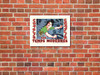
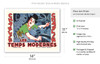
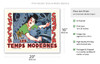
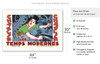
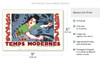
The image shows a poster for the classic Charlie Chaplin film, Modern Times (French title: Les Temps Modernes), which was released on February 5, 1936. This iconic part-talkie satirical comedy film is a critique of industrialization, the struggles of the working class during the Great Depression, and the dehumanizing effects of factory automation.
Film Details
Release Date: February 5, 1936.
Written & Directed by: Charlie Chaplin.
Starring: Charlie Chaplin (as the Little Tramp) and Paulette Goddard.
Genre: Silent/part-talkie satirical slapstick comedy.
Synopsis & Themes
The film follows Chaplin's Little Tramp character as he endures a nervous breakdown from the relentless pace of an assembly line and subsequently struggles with unemployment and poverty in the modern, industrialized world.
Key themes include:
Factory Automation: The famous assembly line sequence, where the Tramp gets caught in the gears of a massive machine, symbolizes the crushing demands of industrial labor.
Social Commentary: Chaplin addresses issues like mass unemployment, economic inequality, and political intolerance that were prevalent during the Great Depression.
Sound Innovation: Although primarily a silent film, it notably incorporates synchronized sound effects and music, and features the first time Chaplin's voice is heard on screen—singing a nonsensical song in gibberish.
Modern Times is widely regarded as one of the greatest films ever and marks the final appearance of Chaplin's beloved Little Tramp character.
Artwork Description
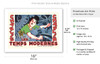
Central Imagery: The artwork prominently features Charlie Chaplin's "Little Tramp" character caught within the massive, intricate machinery of a factory. He is reaching for a wrench, visually trapped and integrated into the complex system of gears.
Style: The illustration uses a bold, graphic style with a limited color palette. This pop-art aesthetic with "cyberpunk energy" effectively conveys the film's message in a simple, impactful way. The titles are rendered in large, stylized red and white fonts, typical of vintage film poster typography.
Symbolism & Themes: The design serves as a powerful visual critique of industrialization and the dehumanizing effects of modern factory automation. Chaplin's predicament within the gears symbolizes the struggles of the working class during the Great Depression, where individuals were often reduced to cogs in a machine. The poster's focus on the machinery perfectly captures the movie's core satire of the "machine age".
This particular design effectively communicates the film's blend of slapstick comedy and poignant social commentary.
View AllClose
The image shows a poster for the classic Charlie Chaplin film, Modern Times (French title: Les Temps Modernes), which was released on February 5, 1936. This iconic part-talkie satirical comedy film is a critique of industrialization, the struggles of the working class during the Great Depression, and the dehumanizing effects of factory automation.
Film Details
Release Date: February 5, 1936.
Written & Directed by: Charlie Chaplin.
Starring: Charlie Chaplin (as the Little Tramp) and Paulette Goddard.
Genre: Silent/part-talkie satirical slapstick comedy.
Synopsis & Themes
The film follows Chaplin's Little Tramp character as he endures a nervous breakdown from the relentless pace of an assembly line and subsequently struggles with unemployment and poverty in the modern, industrialized world.
Key themes include:
Factory Automation: The famous assembly line sequence, where the Tramp gets caught in the gears of a massive machine, symbolizes the crushing demands of industrial labor.
Social Commentary: Chaplin addresses issues like mass unemployment, economic inequality, and political intolerance that were prevalent during the Great Depression.
Sound Innovation: Although primarily a silent film, it notably incorporates synchronized sound effects and music, and features the first time Chaplin's voice is heard on screen—singing a nonsensical song in gibberish.
Modern Times is widely regarded as one of the greatest films ever and marks the final appearance of Chaplin's beloved Little Tramp character.
Artwork Description
Central Imagery: The artwork prominently features Charlie Chaplin's "Little Tramp" character caught within the massive, intricate machinery of a factory. He is reaching for a wrench, visually trapped and integrated into the complex system of gears.
Style: The illustration uses a bold, graphic style with a limited color palette. This pop-art aesthetic with "cyberpunk energy" effectively conveys the film's message in a simple, impactful way. The titles are rendered in large, stylized red and white fonts, typical of vintage film poster typography.
Symbolism & Themes: The design serves as a powerful visual critique of industrialization and the dehumanizing effects of modern factory automation. Chaplin's predicament within the gears symbolizes the struggles of the working class during the Great Depression, where individuals were often reduced to cogs in a machine. The poster's focus on the machinery perfectly captures the movie's core satire of the "machine age".
This particular design effectively communicates the film's blend of slapstick comedy and poignant social commentary.


