













Description
Vintage Film Movie Poster
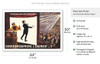
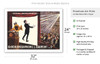
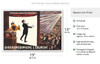
The image is a vintage French poster from around 1908 advertising the Chronomégaphone sound film system by L. Gaumont & Cie. This device was a pioneering attempt at synchronizing motion pictures with sound for a large audience.
The Chronomégaphone System
Technology: The Chronomégaphone was a "sound-on-disc" system that synchronized a cinema projector with a large-format disc phonograph.
Amplification: To make the sound audible in large theaters, the system used a compressed-air amplifier, sometimes called an Eglephone. This mechanical amplification was powerful enough to fill an auditorium with up to 4,000 seats.
Operation: A skilled operator was required to manage two turntables and seamlessly switch between them to provide a continuous soundtrack for longer films, as the records of the era had limited playing time.
Films: The system was used to show "phonoscènes" or "talking films," which were typically short films of singers or actors lip-syncing to pre-recorded opera arias or popular songs.
Inventor: The system was developed by French industrialist and film pioneer Léon Gaumont, founder of the Gaumont film company.
The technology eventually became obsolete with the advent of more reliable electronic amplification and sound-on-film processes in the 1920s.
View AllClose
The image is a vintage French poster from around 1908 advertising the Chronomégaphone sound film system by L. Gaumont & Cie. This device was a pioneering attempt at synchronizing motion pictures with sound for a large audience.
The Chronomégaphone System
Technology: The Chronomégaphone was a "sound-on-disc" system that synchronized a cinema projector with a large-format disc phonograph.
Amplification: To make the sound audible in large theaters, the system used a compressed-air amplifier, sometimes called an Eglephone. This mechanical amplification was powerful enough to fill an auditorium with up to 4,000 seats.
Operation: A skilled operator was required to manage two turntables and seamlessly switch between them to provide a continuous soundtrack for longer films, as the records of the era had limited playing time.
Films: The system was used to show "phonoscènes" or "talking films," which were typically short films of singers or actors lip-syncing to pre-recorded opera arias or popular songs.
Inventor: The system was developed by French industrialist and film pioneer Léon Gaumont, founder of the Gaumont film company.
The technology eventually became obsolete with the advent of more reliable electronic amplification and sound-on-film processes in the 1920s.


