




Description
Vintage French Advertising Poster
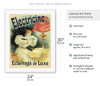
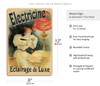
This poster, titled "Electricine Eclairage de Luxe" (meaning "Electricine Luxury Lighting"), is a vintage French advertising poster from the Belle Époque era, created by artist Lucien Lefèvre (sometimes cited as Lucien Baylac). The poster was produced in 1895 and is a well-known example of the Art Nouveau style.
Poster Details
Artist: Lucien Lefèvre (sometimes mistakenly attributed to Jules Chéret)
Title: Electricine Eclairage de Luxe (Luxury Lighting)
Year: Circa 1895
Style: Art Nouveau
Subject: A woman writing at a desk illuminated by an electric lamp, advertising "Electricine" lamp oil or electric lighting
Significance: The design evokes the style of Jules Chéret, a master poster artist, and was featured as plate 55 in the famous Maîtres de l'Affiche art publication series.
About the Artist
Lucien Lefèvre was a French poster artist who worked as part of the creative team at the Chaix printing plant, alongside other artists influenced by Jules Chéret. He is known for incorporating the classic components of the "Cheret school" into his work, such as the use of vertical format and specific color palettes.
View AllClose
This poster, titled "Electricine Eclairage de Luxe" (meaning "Electricine Luxury Lighting"), is a vintage French advertising poster from the Belle Époque era, created by artist Lucien Lefèvre (sometimes cited as Lucien Baylac). The poster was produced in 1895 and is a well-known example of the Art Nouveau style.
Poster Details
Artist: Lucien Lefèvre (sometimes mistakenly attributed to Jules Chéret)
Title: Electricine Eclairage de Luxe (Luxury Lighting)
Year: Circa 1895
Style: Art Nouveau
Subject: A woman writing at a desk illuminated by an electric lamp, advertising "Electricine" lamp oil or electric lighting
Significance: The design evokes the style of Jules Chéret, a master poster artist, and was featured as plate 55 in the famous Maîtres de l'Affiche art publication series.
About the Artist
Lucien Lefèvre was a French poster artist who worked as part of the creative team at the Chaix printing plant, alongside other artists influenced by Jules Chéret. He is known for incorporating the classic components of the "Cheret school" into his work, such as the use of vertical format and specific color palettes.


