














Description
Vintage Cabaret Casino Poster
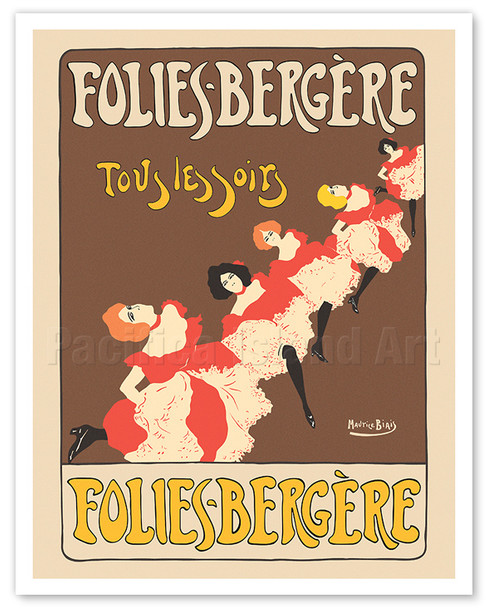
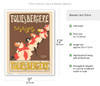
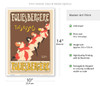
This is a reproduction of a famous vintage French poster for the Folies Bergère cabaret, created by the artist Maurice Biais around 1900. The text "Tous les soirs" translates to "Every Evening" in English, advertising nightly performances.
Poster Details
Artist: Maurice Biais (1875–1926)
Venue: Folies Bergère, a renowned Parisian cabaret and music hall
Date: Circa 1894-1900
Style: Art Nouveau, incorporating influences like the pronounced diagonal lines common in Japonisme art
Content: The poster features a line of cancan dancers in red and white ruffled dresses, captured in a dynamic pose. Biais was known for his use of flat tones and broad, sensuous outlines.
Original Printer: Imp. Charles Verneau, Paris
Cultural Context
The Folies Bergère was a celebrated venue during the Belle Époque in Paris, known for its extravagant revues, scantily clad chorus girls, and lively atmosphere. Posters for the venue, like this one and others by artists such as Jules Chéret and Henri de Toulouse-Lautrec, became iconic examples of public art and the era's vibrant nightlife advertising.
View AllClose
This is a reproduction of a famous vintage French poster for the Folies Bergère cabaret, created by the artist Maurice Biais around 1900. The text "Tous les soirs" translates to "Every Evening" in English, advertising nightly performances.
Poster Details
Artist: Maurice Biais (1875–1926)
Venue: Folies Bergère, a renowned Parisian cabaret and music hall
Date: Circa 1894-1900
Style: Art Nouveau, incorporating influences like the pronounced diagonal lines common in Japonisme art
Content: The poster features a line of cancan dancers in red and white ruffled dresses, captured in a dynamic pose. Biais was known for his use of flat tones and broad, sensuous outlines.
Original Printer: Imp. Charles Verneau, Paris
Cultural Context
The Folies Bergère was a celebrated venue during the Belle Époque in Paris, known for its extravagant revues, scantily clad chorus girls, and lively atmosphere. Posters for the venue, like this one and others by artists such as Jules Chéret and Henri de Toulouse-Lautrec, became iconic examples of public art and the era's vibrant nightlife advertising.


