










Description
Vintage Religious Art
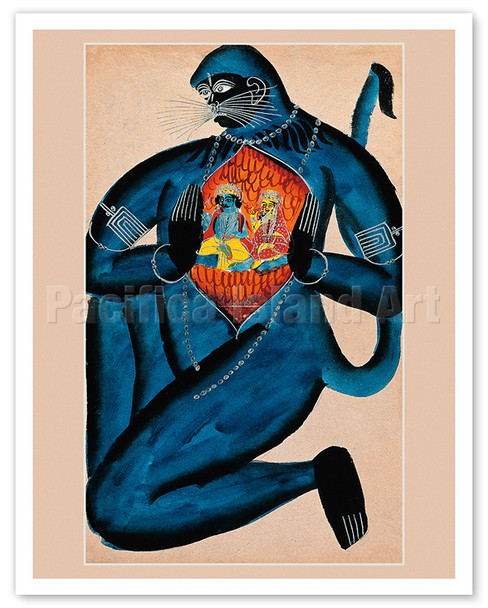
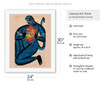
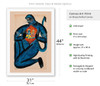
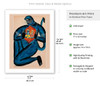
This image is a traditional Kalighat painting that depicts an iconic moment from the Hindu epic, the Ramayana, where Hanuman reveals the divine couple, Rama and Sita, enshrined within his heart.
Description and Meaning
The Deity: The central figure is Hanuman, the monkey god, renowned for his strength, courage, and unparalleled devotion (bhakti) to Lord Rama.
The Act: In popular lore not found in the original Ramayana text but prevalent in later traditions, a moment occurs after Rama's coronation when some courtiers mock Hanuman for discarding a gift of a pearl necklace because it did not contain the name of Rama. To prove that Rama and Sita reside in his very being, Hanuman dramatically tears open his chest to reveal their miniature images in his heart.
The Symbolism: This scene is a powerful symbol of ultimate devotion and the idea that the divine resides within the heart of a true devotee. It illustrates the deep, personal, and unwavering love that Hanuman has for his lord and lady. The act of tearing open his chest to show the divine couple within his heart is a powerful visual metaphor for his spiritual connection and love.
The Art Style: The painting is characteristic of the Kalighat Pat art style, which originated in 19th-century Calcutta, India, near the Kali Temple. This style is known for its bold, clean lines, vibrant colors, simplified figures, and swift brushstrokes, often featuring religious themes and social commentary.
View AllClose
This image is a traditional Kalighat painting that depicts an iconic moment from the Hindu epic, the Ramayana, where Hanuman reveals the divine couple, Rama and Sita, enshrined within his heart.
Description and Meaning
The Deity: The central figure is Hanuman, the monkey god, renowned for his strength, courage, and unparalleled devotion (bhakti) to Lord Rama.
The Act: In popular lore not found in the original Ramayana text but prevalent in later traditions, a moment occurs after Rama's coronation when some courtiers mock Hanuman for discarding a gift of a pearl necklace because it did not contain the name of Rama. To prove that Rama and Sita reside in his very being, Hanuman dramatically tears open his chest to reveal their miniature images in his heart.
The Symbolism: This scene is a powerful symbol of ultimate devotion and the idea that the divine resides within the heart of a true devotee. It illustrates the deep, personal, and unwavering love that Hanuman has for his lord and lady. The act of tearing open his chest to show the divine couple within his heart is a powerful visual metaphor for his spiritual connection and love.
The Art Style: The painting is characteristic of the Kalighat Pat art style, which originated in 19th-century Calcutta, India, near the Kali Temple. This style is known for its bold, clean lines, vibrant colors, simplified figures, and swift brushstrokes, often featuring religious themes and social commentary.