















Description
Vintage Italian Movie Poster
Ladri di biciclette
un Film di Vittorio De Sica
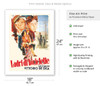
The image shows a poster for the classic Italian neorealist film "Ladri di biciclette", known in English as Bicycle Thieves or The Bicycle Thief.
About the Film
Director: The film was directed by Vittorio De Sica.
Release Year: It was released in 1948 and is considered a masterpiece of Italian neorealism.
Plot: Set in post-World War II Rome, the story follows a poor, unemployed man named Antonio who finally gets a job pasting posters, but it requires a bicycle. After he and his wife pawn their bedsheets to retrieve his bicycle, it is stolen on his first day of work. Antonio and his young son, Bruno, then search the streets of the city for the stolen bicycle, facing desperation and the harsh realities of poverty and social indifference.
Significance: The film is celebrated for its powerful depiction of the human condition and the struggles of everyday people in post-war Italy, using non-professional actors and shooting on location to create a strong sense of authenticity.
Artwork: It was designed by Ercole Brini, is a watercolor illustration featuring a montage of key scenes and characters. The composition effectively captures the film's poignant social commentary on poverty and desperation in post-war Rome, using an unpretentious style that mirrors the film's neorealist aesthetic.
View AllClose
Ladri di biciclette
un Film di Vittorio De Sica
The image shows a poster for the classic Italian neorealist film "Ladri di biciclette", known in English as Bicycle Thieves or The Bicycle Thief.
About the Film
Director: The film was directed by Vittorio De Sica.
Release Year: It was released in 1948 and is considered a masterpiece of Italian neorealism.
Plot: Set in post-World War II Rome, the story follows a poor, unemployed man named Antonio who finally gets a job pasting posters, but it requires a bicycle. After he and his wife pawn their bedsheets to retrieve his bicycle, it is stolen on his first day of work. Antonio and his young son, Bruno, then search the streets of the city for the stolen bicycle, facing desperation and the harsh realities of poverty and social indifference.
Significance: The film is celebrated for its powerful depiction of the human condition and the struggles of everyday people in post-war Italy, using non-professional actors and shooting on location to create a strong sense of authenticity.
Artwork: It was designed by Ercole Brini, is a watercolor illustration featuring a montage of key scenes and characters. The composition effectively captures the film's poignant social commentary on poverty and desperation in post-war Rome, using an unpretentious style that mirrors the film's neorealist aesthetic.


