












Description
Vintage Film Movie Poster
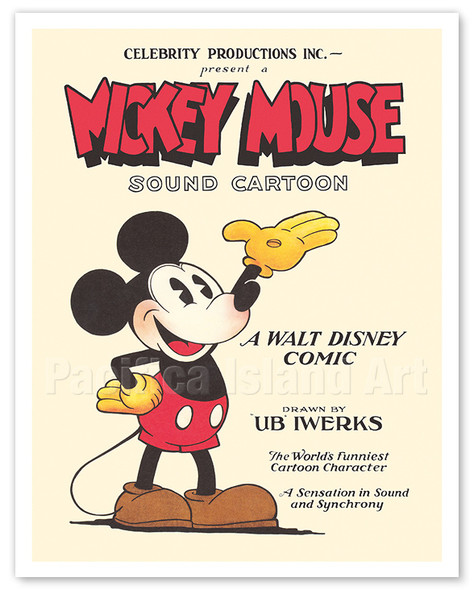
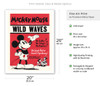
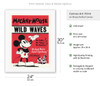
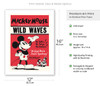
This is a reproduction of a promotional poster for the vintage Mickey Mouse animated short film "Wild Waves". The film was released in black and white on December 18, 1929, making it the fifteenth Mickey Mouse short produced and the last one released by Celebrity Productions.
Key Information
Title: Wild Waves
Character: Mickey Mouse
Release Date: December 18, 1929 (some sources also mention April 25, 1930)
Studio: Walt Disney Studios
Animation: The last Mickey Mouse cartoon animated solely by Ub Iwerks before he left the studio.
Plot: The story features Mickey as a singing lifeguard who must rescue Minnie Mouse after she is swept out to sea by a large wave. After saving her, he performs a song and dance number with various sea animals to cheer her up.
Significance: The short is notable for featuring Mickey's speaking lines voiced by Carl Stalling, the film's composer, rather than Walt Disney, who typically voiced the character.
The poster highlights that the film includes sound and synchrony, a key innovation at the time.
View AllClose
This is a reproduction of a promotional poster for the vintage Mickey Mouse animated short film "Wild Waves". The film was released in black and white on December 18, 1929, making it the fifteenth Mickey Mouse short produced and the last one released by Celebrity Productions.
Key Information
Title: Wild Waves
Character: Mickey Mouse
Release Date: December 18, 1929 (some sources also mention April 25, 1930)
Studio: Walt Disney Studios
Animation: The last Mickey Mouse cartoon animated solely by Ub Iwerks before he left the studio.
Plot: The story features Mickey as a singing lifeguard who must rescue Minnie Mouse after she is swept out to sea by a large wave. After saving her, he performs a song and dance number with various sea animals to cheer her up.
Significance: The short is notable for featuring Mickey's speaking lines voiced by Carl Stalling, the film's composer, rather than Walt Disney, who typically voiced the character.
The poster highlights that the film includes sound and synchrony, a key innovation at the time.