






Description
From an Original Color Engraving
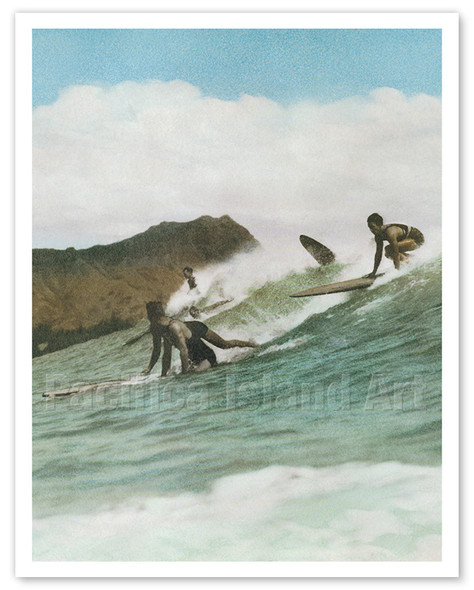
This is a reproduction of a color engraving from around 1866 titled "Native Hawaiians Wave Riding - Surf Swimming in Hawaii". It is a 19th-century historical illustration depicting the traditional Hawaiian practice of surfing.
The Hawaiian term for surfing is heʻe nalu, which literally translates to "wave sliding".
Historical Context
Origins: Hawaiians are widely credited with inventing surfing, which held deep cultural and spiritual significance for them, not just a recreational activity.
Documentation: The first written descriptions of surfing by Western explorers date back to Lieutenant James King during Captain Cook's third voyage in 1779. Early illustrations, like this engraving, helped expose Western readers to the practices in Hawaii, describing it as "astonishing".
Art Form: The image is an example of an early illustration, likely a hand-colored woodcut, of a 19th-century scene.
Cultural Significance: For Native Hawaiians, surfing was more than just a sport; it was a connection to the ocean and their ancestors, sometimes involving rituals and chants. Historically, the length and type of wood used for surfboards differentiated royalty (ali'i) from commoners.
View AllClose
This is a reproduction of a color engraving from around 1866 titled "Native Hawaiians Wave Riding - Surf Swimming in Hawaii". It is a 19th-century historical illustration depicting the traditional Hawaiian practice of surfing.
The Hawaiian term for surfing is heʻe nalu, which literally translates to "wave sliding".
Historical Context
Origins: Hawaiians are widely credited with inventing surfing, which held deep cultural and spiritual significance for them, not just a recreational activity.
Documentation: The first written descriptions of surfing by Western explorers date back to Lieutenant James King during Captain Cook's third voyage in 1779. Early illustrations, like this engraving, helped expose Western readers to the practices in Hawaii, describing it as "astonishing".
Art Form: The image is an example of an early illustration, likely a hand-colored woodcut, of a 19th-century scene.
Cultural Significance: For Native Hawaiians, surfing was more than just a sport; it was a connection to the ocean and their ancestors, sometimes involving rituals and chants. Historically, the length and type of wood used for surfboards differentiated royalty (ali'i) from commoners.