













Description
From an Original Color Painting
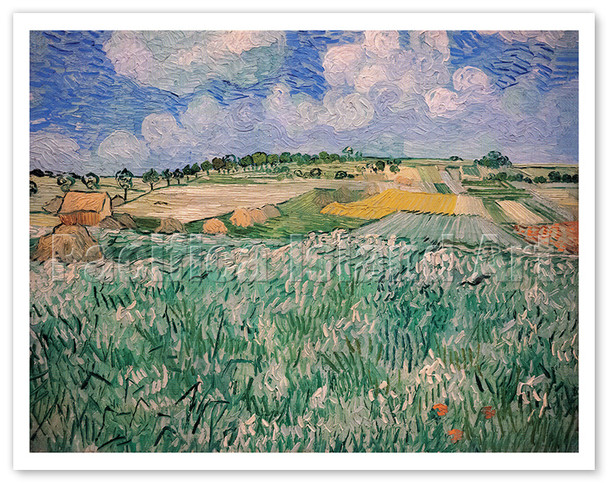
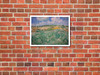
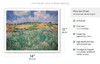
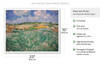
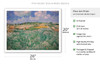
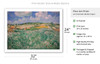
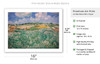
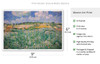
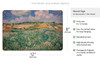
This is a reproduction of a painting that is titled "Plain near Auvers" (or The Plain at Auvers) by the Dutch Post-Impressionist artist Vincent van Gogh. It was painted in July 1890, during the final months of the artist's life, in the countryside surrounding the village of Auvers-sur-Oise, France.
The original painting is an oil on canvas and measures approximately 73.5 cm × 92.0 cm (28.9 in × 36.2 in).
Key Aspects of the Painting:
Subject and Composition: The painting depicts a vast, expansive landscape of rolling wheat and grass fields under a dynamic, swirling sky. The foreground is dominated by a lush field with patches of red flowers, creating a sense of dynamic movement. The composition, which often uses an elongated "double-square" format, captures the vastness of the natural scene.
Style and Technique: It is characterized by van Gogh's signature bold, expressive brushstrokes and vibrant color contrasts. The thick application of paint (impasto) creates a rich, textured surface that conveys a sense of energy and vitality.
Interpretation and Emotion: The work is widely interpreted as a reflection of the artist's turbulent emotional state during this period. The broad landscape can suggest a sense of freedom, while the restless, swirling sky hints at inner turmoil or anxiety. Van Gogh saw the wheat fields and the cycle of nature as symbols of life, death, and eternity.
Historical Context: Van Gogh painted this work while under the care of Dr. Paul Gachet for his depression. He was highly prolific during his short stay in Auvers, producing over 70 paintings in two months. He tragically died from a self-inflicted gunshot wound just a few weeks after this painting was completed.
The painting is part of the permanent collection at the Neue Pinakothek in Munich, Germany.
View AllClose
This is a reproduction of a painting that is titled "Plain near Auvers" (or The Plain at Auvers) by the Dutch Post-Impressionist artist Vincent van Gogh. It was painted in July 1890, during the final months of the artist's life, in the countryside surrounding the village of Auvers-sur-Oise, France.
The original painting is an oil on canvas and measures approximately 73.5 cm × 92.0 cm (28.9 in × 36.2 in).
Key Aspects of the Painting:
Subject and Composition: The painting depicts a vast, expansive landscape of rolling wheat and grass fields under a dynamic, swirling sky. The foreground is dominated by a lush field with patches of red flowers, creating a sense of dynamic movement. The composition, which often uses an elongated "double-square" format, captures the vastness of the natural scene.
Style and Technique: It is characterized by van Gogh's signature bold, expressive brushstrokes and vibrant color contrasts. The thick application of paint (impasto) creates a rich, textured surface that conveys a sense of energy and vitality.
Interpretation and Emotion: The work is widely interpreted as a reflection of the artist's turbulent emotional state during this period. The broad landscape can suggest a sense of freedom, while the restless, swirling sky hints at inner turmoil or anxiety. Van Gogh saw the wheat fields and the cycle of nature as symbols of life, death, and eternity.
Historical Context: Van Gogh painted this work while under the care of Dr. Paul Gachet for his depression. He was highly prolific during his short stay in Auvers, producing over 70 paintings in two months. He tragically died from a self-inflicted gunshot wound just a few weeks after this painting was completed.
The painting is part of the permanent collection at the Neue Pinakothek in Munich, Germany.