














Description
From an Original Color Painting
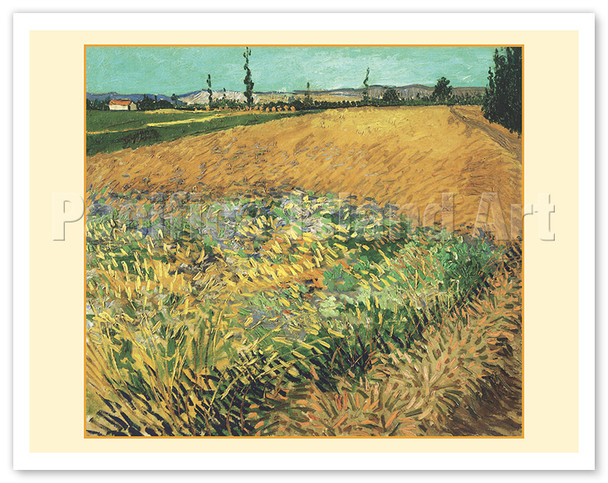
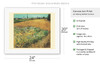
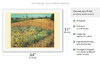
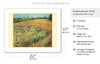
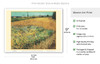
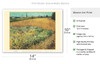
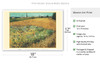
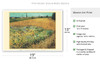
This is a reproduction of a painting that is titled Wheatfield (1888) by the Dutch Post-Impressionist artist Vincent van Gogh. This particular work, also known by names such as Arles: View from the Wheat Fields, was created during his time in Arles, France, a period characterized by the vibrant light and colors of the Provençal landscape.
Key Details
Artist: Vincent van Gogh (1853–1890)
Date: June 1888
Medium: Oil on canvas
Location: Musée Rodin, Paris, France
About the Artwork
Composition & Style: The painting is notable for its deep perspective, vivid colors, and energetic, thick brushstrokes that convey movement and life. Van Gogh applied the paint thickly (impasto) and worked quickly to capture the scene's intensity under the blazing sun.
Symbolism: Van Gogh viewed wheat fields as a symbol of the eternal cycle of nature and life. He sought to express "sadness, extreme loneliness" in some of his later field paintings, but also what he considered "healthy and fortifying" about the countryside.
Distinction: This is one of a series of wheat field paintings, but unlike the more dramatic Wheatfield with Crows (1890), which features a turbulent sky and is often mistakenly called his last painting, this earlier work from 1888 is seen as reflecting a period of happiness and creative confidence for the artist.
View AllClose
This is a reproduction of a painting that is titled Wheatfield (1888) by the Dutch Post-Impressionist artist Vincent van Gogh. This particular work, also known by names such as Arles: View from the Wheat Fields, was created during his time in Arles, France, a period characterized by the vibrant light and colors of the Provençal landscape.
Key Details
Artist: Vincent van Gogh (1853–1890)
Date: June 1888
Medium: Oil on canvas
Location: Musée Rodin, Paris, France
About the Artwork
Composition & Style: The painting is notable for its deep perspective, vivid colors, and energetic, thick brushstrokes that convey movement and life. Van Gogh applied the paint thickly (impasto) and worked quickly to capture the scene's intensity under the blazing sun.
Symbolism: Van Gogh viewed wheat fields as a symbol of the eternal cycle of nature and life. He sought to express "sadness, extreme loneliness" in some of his later field paintings, but also what he considered "healthy and fortifying" about the countryside.
Distinction: This is one of a series of wheat field paintings, but unlike the more dramatic Wheatfield with Crows (1890), which features a turbulent sky and is often mistakenly called his last painting, this earlier work from 1888 is seen as reflecting a period of happiness and creative confidence for the artist.


